
Outdoor activities: babies at the swimming pool and the beach
A toddler’s first outdoor activities often take place by the water: baby swimming classes, afternoons at the beach, or a swim in the lake on holiday. This selection brings together the gear that makes these outings safer and more comfortable, from water shoes and swimming vests to outfits that protect their skin from the sun.
Enjoy the water from an early age.
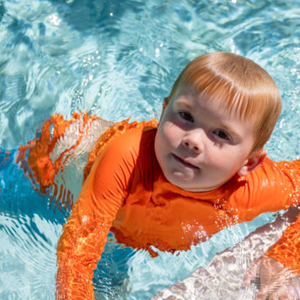
Preparing for baby's first trip to the pool
Baby swimming sessions usually welcome children from the age of four months, in a pool with water that is much warmer than in a standard swimming pool. To help your baby get used to the change, the French Association of Outpatient Paediatrics recommends gradually lowering the temperature of their bath at home, from 37°C to 33 or 34°C.
In your bag, pack a swim nappy, which most swimming pools require, a hooded towel for afterwards, a snack and slippers to prevent slipping on wet tiles. A short session is enough at first, as babies get cold much faster than adults, even in heated water.
Kit baby out from head to toe for the water
For what your baby will wear in the water, the swimwear page brings together flotation vests, swimsuits, leggings, tunics, gloves and water shoes for little ones. For afterwards, the bath page has towels and accessories for rinsing off salt or chlorine, and pushchairs make it easier to get to the beach. Play and development helps extend those discoveries at home, on a play mat or in a playpen.
Protecting little ones' skin from the sun
UV-protective clothing offers better protection than sun cream alone, as long as it has a UPF 50+ rating and covers the shoulders, arms and thighs. European standard EN 13758-2 sets out the requirements for sun-protective clothing, and tightly woven polyester and elastane fabric stays effective when wet, unlike cotton.
For babies, health authorities recommend avoiding direct sun exposure before the age of one and staying in the shade during the hottest hours, between midday and 4 pm. Add a wide-brimmed hat or a cap with a neck flap, suitable sunglasses and sun cream on any uncovered areas, such as the face and tops of the feet.
Keeping an eye on a child near water
A flotation aid never replaces an adult: standard EN 13138-1, which covers swimming vests and armbands, also requires the instructions to say that they do not prevent drowning. A young child can drown silently, in just a few moments and in very little water.
At the beach or the pool, choose an adult to supervise without a phone in hand and stay within arm's reach of young children. Choose a flotation aid based on the child's weight, as shown on the label, rather than their age. By a private swimming pool, the 2003 law requires a fence, cover, shelter or alarm, but this never means you can take your eyes off the child.
Getting baby's summer in the water ready at the right time
Get your water gear ready well before the holidays. Black Friday baby products and the Christmas season are good times to buy a first swimming outfit for baby swimming sessions; the winter sales and spring French Days are ideal for getting ahead on summer sizes. The summer sales are useful for last-minute trips, the start of the school year for club sign-ups, and baby product clearance brings together end-of-line items all year round.
Frequently asked questions
At what age can I take my baby to the seaside?
There is no minimum age for the beach, but before the age of one, babies should stay in the shade and sheltered from the wind, away from direct sunlight. The sea is often too cold for a baby, so limit them to short dips, always in your arms.
Does my baby need water shoes at the beach?
They are very useful on pebbles, rocks and hot afternoon sand, and protect against sharp shells. Choose a flexible, non-slip sole and a quick-drying upper to prevent rubbing.
What water games can I offer a two-year-old?
At this age, pouring water between buckets and watering cans, playing in puddles and using a shallow paddling pool are ideal. Your child can discover water at their own pace, standing up and without a flotation aid, but always under an adult's constant supervision.
How can I tell if my baby is cold in the water?
Shivering, bluish lips, or a baby who tenses up and whimpers are the first signs. Take them out straight away, wrap them in a hooded towel and warm them against you: little ones lose heat very quickly.
How should I rinse swimming gear after a swim?
Rinse the vest, swimsuit and water shoes in fresh water as soon as you get back to remove chlorine or salt, which can weaken the fibres and neoprene. Leave them flat to dry in the shade, never on a radiator or in direct sunlight.













