
Baby slings and carriers, baby close to you


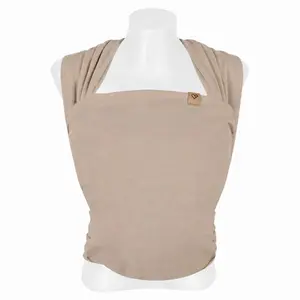


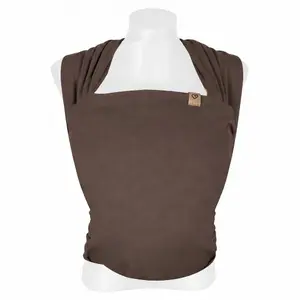


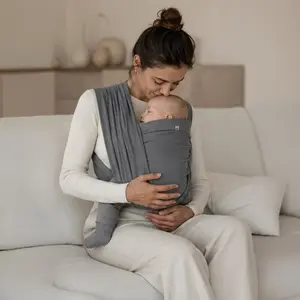


A baby sling or baby carrier keeps your child close to you, with your hands free, wherever a pushchair can’t go: stairs, markets, paths or evenings when baby wants to be held. A stretchy wrap for a newborn, a tie-on mei tai or a buckle baby carrier, each style suits a different age and way of carrying, always in an ergonomic position.
Hands free, baby close to you.
Woven, stretchy or mei tai sling, or buckle baby carrier
- The stretchy sling, soft and snug, is tied once and then you can put your baby in without retying it: ideal for newborns and beginners, it offers less support as your child gains weight.
- The woven sling, with no elastane, allows all tying methods and can be used for longer, but takes some practice to learn.
- The mei tai, inspired by a traditional Chinese baby carrier, combines a rectangular panel with a waistband and long shoulder straps to tie: a halfway point between a sling and a baby carrier.
- A buckle baby carrier with an ergonomic design can be adjusted in seconds and suits busy parents as well as longer carries with a heavier child.
Other essentials for going out with your baby
Babywearing and a pushchair complement each other throughout the day. For long walks, the pushchairs page compares different chassis, while carrycots let newborns lie flat. A changing bag carries nappies and spare clothes, footmuffs keep your baby warm in winter, and pushchair accessories adapt the chassis to every situation.
Love&Carry and Coracor: two approaches to babywearing
The Tinyflower sling by Coracor, designed in Sweden, combines GOTS-certified organic cotton and elastane in a fabric that stretches in both directions. In one size, it can be used from birth, including for premature babies according to the brand, and up to around 12 kg, then machine washed.
Love&Carry caters for the next stages. The LoveTie is a mei tai with shoulder straps that tie around the wearer, while the Air X is an ergonomic buckle baby carrier: its breathable mesh back and removable cotton panel, which rolls up to uncover the airy mesh, make it suitable for hot days and for children who easily get sweaty against their parent.
Ergonomic positioning and safety rules
When carried correctly, a baby adopts the ergonomic position: a rounded back, tilted pelvis and knees raised higher than the bottom, in an M shape. The fabric supports their thighs from knee to knee, and their back up to the neck until they can hold their head up.
Babywearing specialists sum up safety in a few key points: the carrier should be well adjusted, with no slack; your child's face should always be visible and clear; they should be high enough for you to kiss their forehead by tilting your head; their chin should never be pressed against their chest, to keep their airways clear; and their back should be supported. The EN 13209-2 standard also checks the strength of the buckles and seams on soft baby carriers.
Choosing a baby carrier at key times of the year
Try and compare baby carriers before your baby is born, then buy one at the right time. The Black Friday baby care event comes before the festive season, when a sling makes a lovely newborn gift. Next come the winter baby care sales, the spring French Days, just before breathable styles come into their own, then the summer sales and the start of the school year. Baby care clearance and new baby care products round out the selection.
Frequently asked questions
Can you carry a newborn facing outwards?
No, newborns should be carried facing you: when facing outwards, their legs dangle, their back arches and they cannot turn away when they are overstimulated. You can consider this carrying position later, once they can hold their head up well, for short periods and if the baby carrier allows it.
How long can you carry a baby at a time?
There is no official limit: as long as the position remains correct and both of you are comfortable, you can carry your baby. Take breaks to change and feed your baby and ease the strain on your back, and readjust the fabric each time you start carrying again.
How can you learn to tie a sling?
First practise in front of a mirror with a large cushion, then try with your baby when they are calm and have had a feed, above a bed. A workshop run by a babywearing consultant often lets you correct your technique in a single session.
What length of woven sling should you choose?
Stretchy slings are often sold in one size and adjusted by tying them. For a woven sling, the length depends on the wearer's build and the carries you want to use: a long sling allows for more options, while a short one is enough for simple ties.
How should you carry your baby in winter?
Tuck them under a coat or a babywearing cover that goes over both of you, rather than dressing them in a thick snowsuit, which can affect their position and how well the carrier fits. Cover their head, hands and feet, which stick out from the fabric.











