
Pram carrycots, lie-flat for the first few months
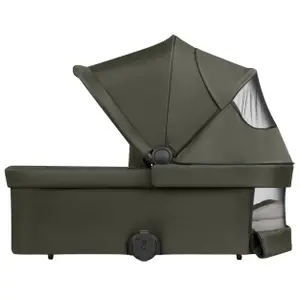
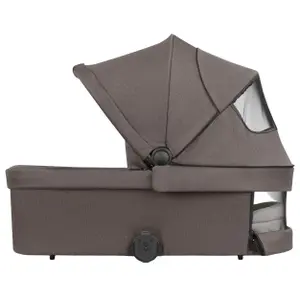
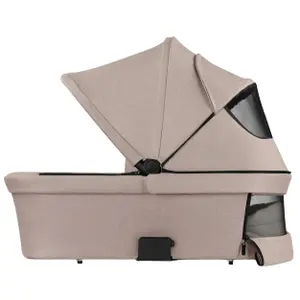
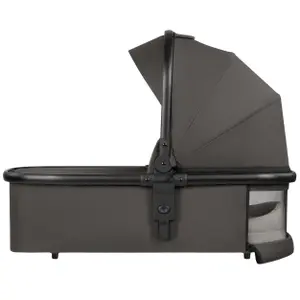
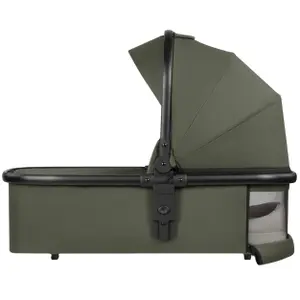

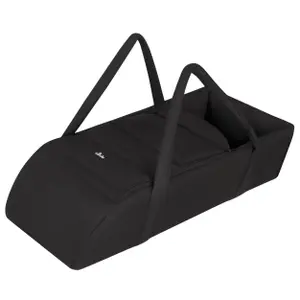
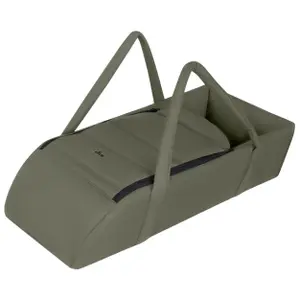

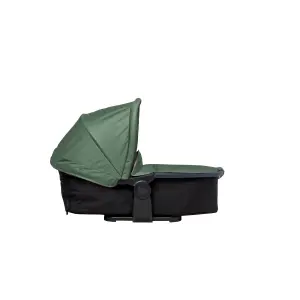
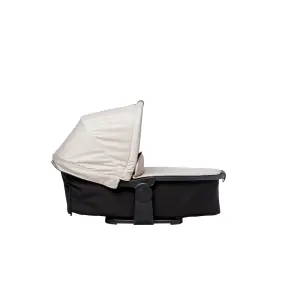
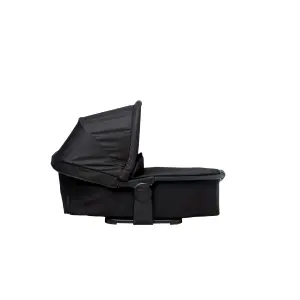
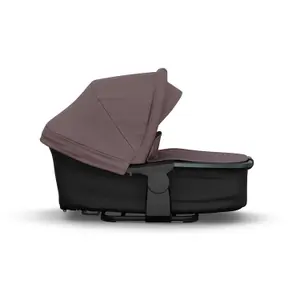
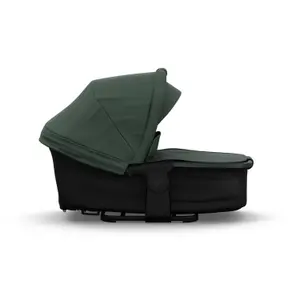

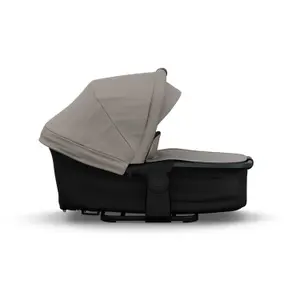
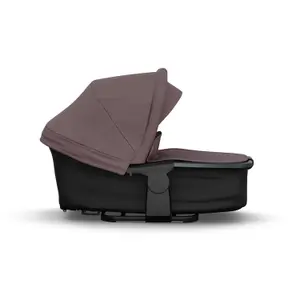
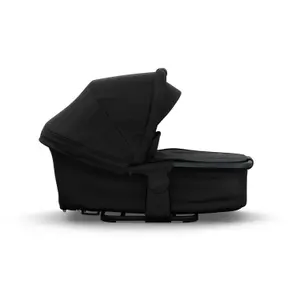
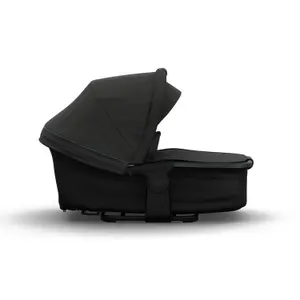
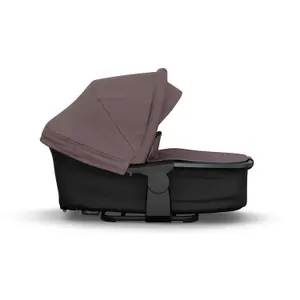
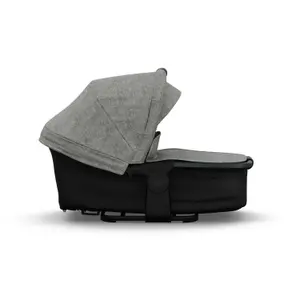
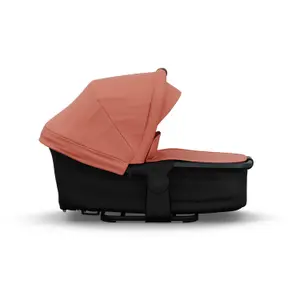
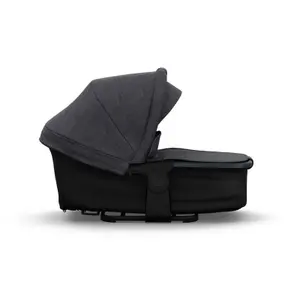
The carrycot is the small portable bed that attaches to the pushchair frame: your baby travels lying flat in it, with their spine well supported, protected from the wind by a hood and a cover. This is the recommended position for long walks in the first few months, from birth until around six months, or until your child starts pushing themselves up on their hands and trying to sit up.
Your baby's first wheeled bed.
Why does a newborn travel lying flat?
At birth, a baby's back is still rounded and their muscles cannot support their head. The flat position of a carrycot spreads their weight along the whole body, leaves their breathing unrestricted and lets them sleep in the same position as in their cot. That's why a carrycot is much better suited to long outings than a car seat, which keeps them semi-upright.
A pushchair carrycot meets the European EN 1888 standard, which covers pushchairs and their carrycots. Use only the mattress supplied by the manufacturer, without adding a second one or a pillow, and stop using it as soon as your baby rolls over, pushes up onto their hands and knees or reaches the maximum weight shown, often 9 kg.
Other pushchair equipment
The carrycot attaches to a chassis chosen from the pushchairs, while pushchair accessories provide adaptors and covers. In winter, footmuffs fit inside the carrycot to keep your baby warm. For trips without wheels, see baby slings and carriers, and to carry everything, the changing bag.
Rigid or soft carrycot: two ways to travel
The rigid carrycot, with its structured shell, protects well from the cold and wind, clips onto the chassis in one easy step and can be carried by its handle to bring your sleeping baby indoors. It is, however, bulky in the boot and hallway. The soft carrycot, made of fabric over a frame, folds flat to save space, but offers slightly less protection in strong winds.
In either case, check the internal length, the thickness of the mattress, whether there is ventilation at the bottom or in the hood for summer, and the quality of the apron, which should cover the opening completely in cold weather. A hood that comes down low also protects your baby's face from the low sun.
Carrycot compatibility and use in the car
A carrycot attaches to the chassis using fixings specific to each brand: most are sold for a particular range of pushchairs, while some fit other chassis with adaptors. Before buying one separately, make sure it is listed as compatible with your pushchair.
A standard carrycot is no use in the car: only certain carrycots have R129 car approval and can be fitted to the back seat with a dedicated fixing kit, with your baby lying down. For everyday journeys, an infant car seat is the standard choice for a newborn, and you can then move from car to pushchair using an adaptor.
Plan to get a carrycot in the last trimester of pregnancy
A carrycot is useful from the first walk, so it's best to have it before your due date. The nursery Black Friday sale and the festive season are two good times to get equipped, before the winter nursery sales. If your baby is due in warmer weather, the spring French Days are followed by the summer sales and back-to-school season. New nursery products showcase the latest carrycots, while nursery clearance offers end-of-line products.
Frequently asked questions
Can a baby sleep in their carrycot overnight?
Only if the instructions say they can, usually with a dedicated stand that holds it securely. Otherwise, use the carrycot for naps on walks while you supervise your baby, and put them in their cot at night.
How do I know if my baby is too big for their carrycot?
Their head or feet touch the sides, they roll over by themselves or push themselves up with their arms: it's time to move them to the pushchair seat, initially set to the reclined position.
How do I keep a carrycot cool in summer?
Open the hood and ventilation window if it has one, remove the apron and cover your baby lightly. Never place a muslin cloth or blanket over the carrycot to provide shade: the air can no longer circulate and the temperature underneath rises quickly.
How do I clean a carrycot?
Remove the inner lining and mattress cover if they come off, then wash them according to the label, often in the machine at a low temperature. Wipe the shell with a damp sponge and let everything dry completely before putting it back together.
Carrycot or reclining seat: which should I choose?
A carrycot provides a proper enclosed bed, with more shelter and comfort for long winter walks. A seat that reclines flat, with an insert, is often enough for city use and takes up less space.











