
3-wheel pushchairs for going off the beaten track
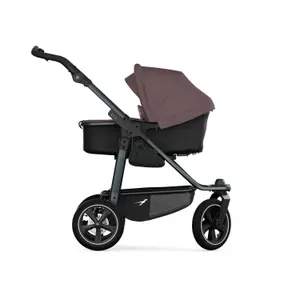
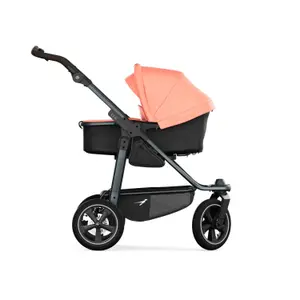
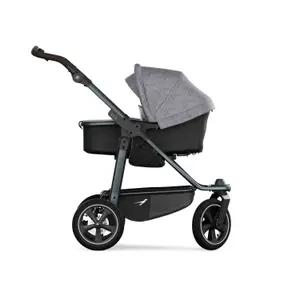
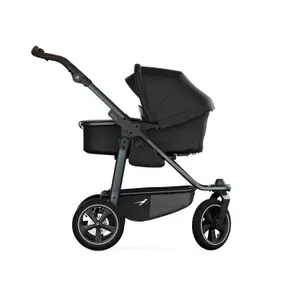
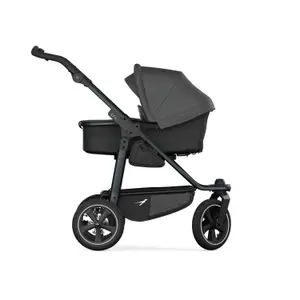
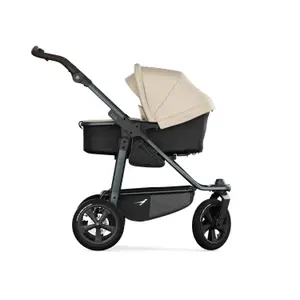
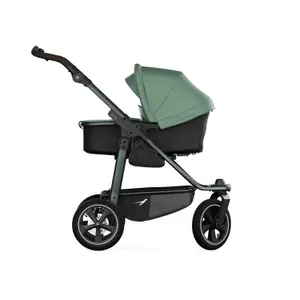
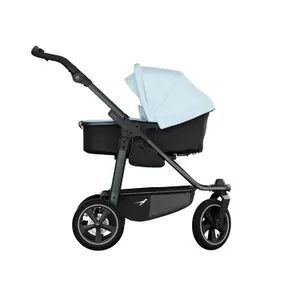

With its single front wheel and two large rear wheels, the 3-wheel pushchair turns sharply in town and handles dirt tracks, grass or sand better than a pushchair with four small wheels. The sportiest models, with a lockable front wheel and a handbrake, are also ideal for parents who run or go rollerblading.
Three large wheels, all terrains.
Why choose three wheels rather than four?
The triangle design places a swivelling front wheel in the centre: a light push on the handle is all it takes to change direction, even with one hand. The wheels are also larger than those on a city pushchair, often inflatable like bike tyres, and roll over roots, cobbles and kerbs without jolting your child.
The trade-off is the extra space it takes up. A three-wheeled pushchair is longer and sometimes wider than a compact pushchair; measure your boot, lift and front door before deciding. The rear wheels, which are often removable on these models, help save space when it’s folded.
Other types of pushchair
For a newborn who will spend most of their time in the city, 2-in-1 pushchairs combine a carrycot and seat on a standard chassis, while 3-in-1 pushchairs also include a car seat. Double pushchairs carry two children side by side or one behind the other, and the pushchairs page brings together all the models, including travel strollers.
Running with a three-wheeled pushchair
Not all three-wheeled pushchairs are designed for running. A jogging pushchair has a lockable front wheel that stays straight, stopping it from wobbling at speed, a handbrake on the handle to slow down on descents, and a wrist strap. The Salsa Run range from ABC Design has all three features, along with three large air-filled tyres, suspension and a sports seat suitable up to 22 kg, with a five-point harness.
For your child’s safety, wait until they can sit up unaided and have full head control before your first run, and ask your paediatrician for advice. Start on a smooth surface and keep to a moderate pace.
Looking after pneumatic tyres
Inflatable wheels need the same care as a bike. Check the tyre pressure once a month with a pump that fits the valve: the recommended pressure is often printed on the sidewall. An underinflated tyre makes the pushchair harder to push, pulls it off course and wears out faster.
If you get a puncture, the inner tube can be patched or replaced, just like on a child’s bike. After a trip to the beach or through mud, rinse the axles with clean water, let them dry, then apply a drop of silicone lubricant so the wheels keep turning freely. Also check the handbrake cable regularly, as it loosens with use.
Looking out for a three-wheeled pushchair on offer
Families who walk or run a lot plan their purchase in advance. Black Friday comes just before the festive season, followed by the winter baby and child sale, leaving you time to get ready for warmer days. The spring French Days, ideal before hiking season, come before the summer sales and the new school year. Previous years’ models can be found in the baby and child clearance.
Frequently asked questions
Is a three-wheeled pushchair stable when cornering?
Yes, at walking pace, as long as you don’t hang anything from the handle and pack the basket from the bottom up. When running, lock the front wheel and slow down before turning, as the triangle is less forgiving than a four-wheeled chassis.
Is a three-wheeled pushchair suitable for a newborn?
Yes, for walks, with a compatible carrycot or a seat that reclines fully flat. For running, however, you’ll need to wait until your child can sit up and has good head control.
Can you use a three-wheeled pushchair in town?
Yes, its swivelling front wheel makes it easy to manoeuvre on pavements. Just check its width and weight if you often use the Underground, stairs or a small lift.
Can you go rollerblading with a three-wheeled pushchair?
Only with a model that the manufacturer says is suitable for this use, and that has a handbrake and wrist strap. Always wear the strap around your wrist: without it, the pushchair will keep going on its own if you fall.
What should you do if the pushchair pulls to one side?
First check that both rear tyres have the same pressure, then make sure the front wheel isn’t buckled. If the problem persists, adjusting the front wheel alignment, a feature on some models, will correct its course.











