
Double pushchairs for two children

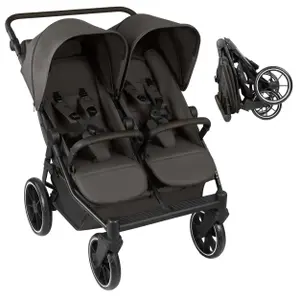
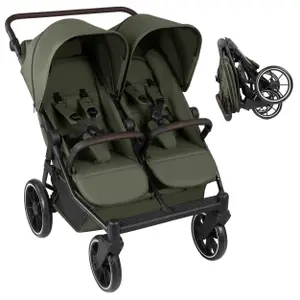
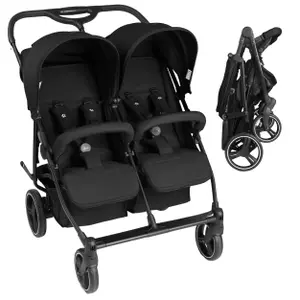
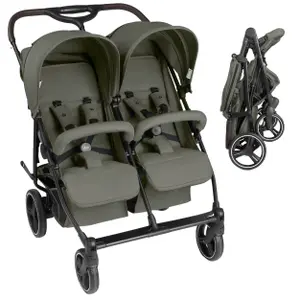
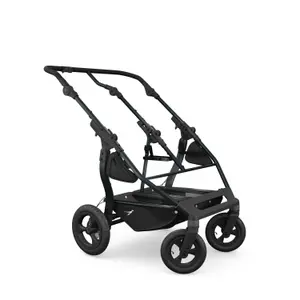
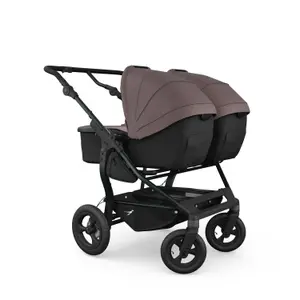
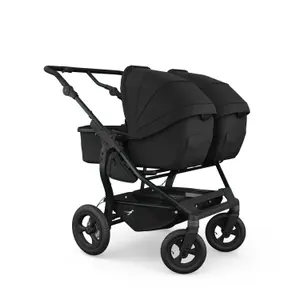
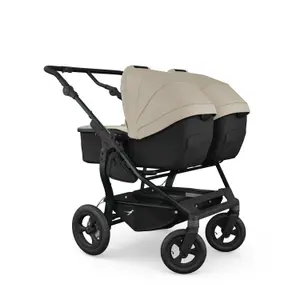

A double pushchair lets you go out on your own with two children: twins from birth, or a newborn and an older child who can’t walk for long yet. There are two main designs, side by side or one behind the other, with very real differences in width, manoeuvrability and how you seat each child depending on their age.
Two seats, one pushchair to push.
Side by side or in-line: two different approaches
A side-by-side double pushchair gives both children an equal seat: they get the same view and comfort, and the front stays light enough to lift over a kerb. Its width is the thing to watch out for, though, as it can be close to the width of a front door and may not fit through narrow aisles or into small lifts.
An in-line double pushchair, also known as a tandem, seats one child behind the other. It is almost as narrow as a single pushchair and can get through almost anywhere, but it is longer and takes more effort to lift at the front. It is often the choice for families in cities and those who use public transport.
Single pushchairs and other configurations
Once the older child is walking well enough not to need a seat, a single pushchair may be all you need again. 2-in-1 pushchairs then take the younger child from carrycot to seat, while 3-in-1 pushchairs also include a car seat. For off-road paths, 3-wheel pushchairs are more suitable, and the pushchairs page features all the models.
Twins or two different ages: choosing a seat for each child
For twins, you need two seats that can accommodate a newborn lying flat: two carrycots, two seats that recline fully flat, or two clipped-in car seats. For children close in age, the set-up is mixed: a carrycot or car seat for the baby and a seat for the older child.
The Zoom by ABC Design, an in-line double pushchair, shows how flexible these can be: its two seats are reversible, so they can face forwards, towards the parents or towards each other, and each position can take a seat unit, carrycot or car seat with the right adapter. The frame stays narrow enough to fit through doorways, and the set-up can change as both children grow.
Weight, folding and everyday life with two children
A double pushchair weighs more than a single, and you also need to add the combined weight of both children. Check the weight limit per seat and the total limit in the instructions, then try folding it: you should not have to remove each module every time you go out.
Also think about everyday use. The brakes often work on both rear wheels with a single pedal, so you are less likely to forget one side. A large basket under the seats takes the place of a bag hung from the handlebar, which you should avoid to prevent the pushchair tipping over. Finally, always put the heaviest child in first and take them out last when using an in-line pushchair, to keep it balanced.
Get a double pushchair at the right time
The arrival of twins or a second child takes planning, and so does buying a double pushchair. The Black Friday baby and childcare deals, followed by the festive season, kick off the period, ahead of the winter baby and childcare sales. The French Days in spring, the summer sales and the back-to-school season complete the calendar. The latest baby and childcare products include the newest double pushchair frames.
Frequently asked questions
Will a double pushchair fit through a standard doorway?
An in-line pushchair will fit through without difficulty, as it is about as wide as a single. For a side-by-side model, compare its overall width with that of your doors, lift and supermarket checkouts.
Can you take a double pushchair on the bus?
Yes, on most public transport networks, using the space set aside for pushchairs and wheelchairs. An in-line model fits more easily and is less likely to block the way.
Do you need two carrycots for twins?
Not necessarily: two seats that recline fully flat, or two clipped-in car seats for short trips, are also suitable. Carrycots are still the most comfortable option for longer walks during the first few months.
Where should you put the baby in an in-line pushchair?
Follow the instructions, which say which seat can take the carrycot or car seat. Most often, the baby goes in the lower or rear seat and the older child in the front, where they can enjoy the view and climb in on their own.
How long should you keep a double pushchair?
As long as the older child needs it for longer outings and both seats are within their weight limits. Once they are happy to walk for an hour, using a single pushchair for the younger child can make everyday life much easier.











