
Boys’ shirts, for everyday wear and special occasions


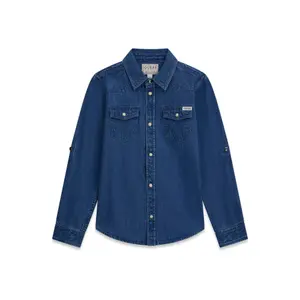

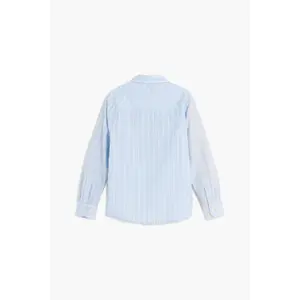

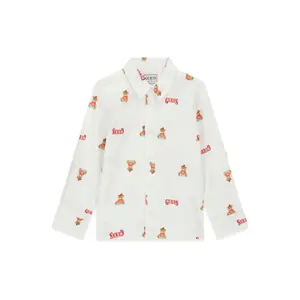
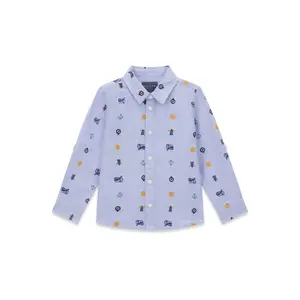
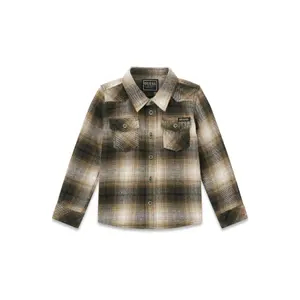
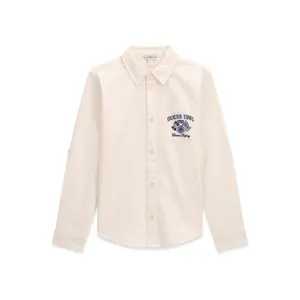
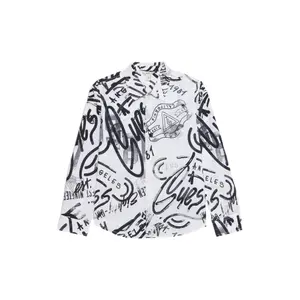
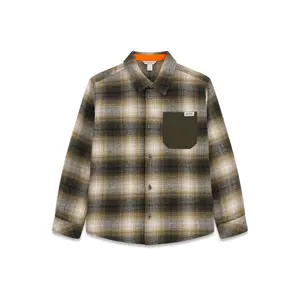

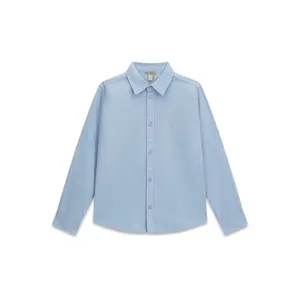
A boys’ shirt gets worn far more often than you might think: with jeans for school, with tailored trousers for a wedding, or open over a T-shirt in summer. This selection includes everything from poplin shirts for babies to printed shirts by Desigual and Jack & Jones, as well as more understated styles that are easy to match. The fabric, collar and sleeve length help you choose the right one for the occasion.
A well-chosen shirt works for every occasion.
Poplin, oxford or flannel: the fabric makes the shirt
Poplin is a tightly woven cotton that feels fine and smooth: it’s the fabric used for smart shirts, which iron neatly and keep you cool. Oxford uses a thicker basket weave with a visible texture. It’s more resistant to the rough and tumble of the playground and less prone to creasing, making it a good choice for a shirt worn every week.
When it’s cold, flannel, a cotton brushed on the surface, adds softness and warmth; by contrast, linen and chambray are more breathable and suit warmer weather. For little ones’ skin, OEKO-TEX-certified cotton guarantees that harmful substances are absent above controlled thresholds.
Complete the outfit: jumpers, jackets and trousers
A shirt works as part of the whole outfit. In winter, a shirt collar peeking out from one of the jumpers and cardigans for boys gives a smart look with little effort. Boys’ trousers, chinos or jeans, provide the base, while jackets and coats go over the top at the end of the school day. For a more relaxed style, polo shirts keep a collar without needing to be fully buttoned up, and T-shirts can be worn under an open shirt.
Printed shirts from Desigual, Jack & Jones and Guess
Desigual, a brand founded in Barcelona in 1984, has built its style around patterns and colours. Its children’s shirts, such as the Lenny or the design featuring Mickey and his friends, are for boys who like to stand out. Jack & Jones, founded in Denmark in 1990, offers the Chill shirt with an all-over print and a relaxed fit, to wear open over a T-shirt or buttoned up with chinos.
For little ones, Guess, an American fashion house founded in Los Angeles in 1981, offers a short-sleeved poplin shirt: a smart piece for a summer ceremony, light enough not to bother a baby.
What shirt size for a child: collar, shoulders and sleeves
Children’s shirts use age-based sizing, matched to height: a size 6 is for a child around 116 cm tall, and a size 10 for one around 140 cm tall. Check the fit in three places. The shoulder seam should sit at the tip of the shoulder, not on the upper arm. Once buttoned up, the collar should let you slip a finger inside without gaping.
With arms outstretched, the sleeve should end at the wrist bone. A sleeve that’s too long can be rolled up twice, but a sleeve that’s too short can’t be fixed. For a particular event, order the shirt early enough to try it on with the rest of the outfit, but not months in advance: between the ages of five and ten, a child grows around five to six centimetres a year.
Shirts on offer, from New Year’s Eve to summer ceremonies
Shirts are often bought for a particular event. Black Friday comes just in time for a New Year’s Eve shirt, and the festive season is when people most often wear smart outfits. The winter sales are a chance to fill out the wardrobe for less. In spring, the French Days come before communion and wedding season, then the summer sales offer discounts on short-sleeved shirts. At the start of the school year, the new in clothing page features the latest styles for school.
Frequently asked questions
How can I avoid ironing a child’s shirt?
Take it out of the washing machine as soon as the cycle ends, shake it out and hang it on a hanger, buttoned at the collar: most creases will drop out on their own. An oxford shirt or cotton blended with a little polyester creases much less than pure poplin.
What shirt should a little boy wear to a wedding?
A white or sky-blue poplin shirt is a reliable choice, with chinos and, for older children, a bow tie. Choose long sleeves that can be rolled up at dinner, and a style that’s easy to button up by themselves.
At what age can a child button up their own shirt?
At around three or four, many children start doing up large buttons, and most can manage it by five or six. Medium-sized buttons and well-cut buttonholes help them get dressed by themselves in the morning.
Is a shirt suitable for a baby?
Yes, for an occasion, as long as you choose a soft cotton shirt with no stiff collar. Check that the buttons are sewn on securely, as a small button coming loose can be a choking hazard for a baby who puts everything in their mouth.
Should you tuck a shirt into trousers?
For a ceremony, a tucked-in shirt and a belt look smarter. For everyday wear, a shirt with a straight hem, cut a little shorter, can be worn over the trousers, while a rounded hem is designed to be tucked in.











