
Baby bottle warmers and formula makers

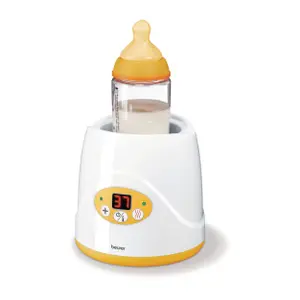
A bottle warmer brings breast or formula milk to drinking temperature without the hot spots caused by a microwave, while a formula maker dispenses water at the right temperature in seconds, or even a measured serving of powdered milk. Two appliances that make bottle-feeding easier, both at night and during the day.
A bottle ready at the right temperature.
Steam, water-bath or formula-making bottle warmers
- A steam bottle warmer heats quickly using a small amount of water turned into steam; it’s very handy at night, but you need to use the stated amount of water to avoid overheating the milk.
- A water-bath bottle warmer warms the bottle in water kept at a set temperature: it’s slower, but heats gently and evenly, making it a good choice for breast milk.
- A formula maker heats water, keeps it at the desired temperature and, on some models, measures out the formula powder too; it saves time for families who make several bottles a day.
- Portable models, powered by a battery or plugged into the car, come in handy when travelling.
For bottle feeding and first meals
Bottle feeding is part of a wider routine. The breastfeeding page brings together breast pumps, sterilisers and accessories for giving breast milk in a bottle. When it’s time for the first purées, food processors steam and blend vegetables, high chairs bring your child to the table and bibs protect their clothes. Children’s tableware then takes over, with training cups and suction bowls, while booster seats let them eat at the table when visiting family and friends.
The right temperature for your baby’s milk
Milk should be served warm, close to body temperature, and at around 37 degrees at most. Before feeding your baby, drip a few drops onto the inside of your wrist or forearm: they should feel just warm, never hot.
The microwave is not recommended, as it heats unevenly and can create hot spots even when the bottle feels warm on the outside. Breast milk is more delicate, so warm it gently in a water bath or bottle warmer. A warmed bottle should be used within half an hour, and any leftovers thrown away: milk that has already been heated must never be heated a second time.
Descaling and caring for your appliance
Heated water leaves limescale in the tank and on the heating element, which increases heating time and affects the temperature. Descale the appliance about once a month, more often if your water is hard, using diluted white vinegar or citric acid in the proportions given in the instructions, then rinse thoroughly with clean water.
Empty the tank after each use rather than leaving water standing in it, wipe the base without ever immersing it, and wash the basket or adapter in soapy water. For a formula maker, also clean the water tank and powder compartment according to the manufacturer’s instructions, to prevent moisture from making the milk clump.
Getting ready for your baby at the right time
Bottle warmers often feature on baby gift lists, which can help you plan when to buy one. Black Friday baby care deals and the Christmas period are a chance to get things ready for parents expecting a winter baby, ahead of the winter baby care sales. The French Days in spring, the summer sales and then the back-to-school period, often when parents return to work and switch to bottle feeding, round out the year. Look out for the latest appliances in new baby care products.
Frequently asked questions
What water should I use to make up a bottle?
Use bottled water labelled as suitable for preparing food for infants, or tap water if it is good quality, with no water softener or lead pipes. If using tap water, let it run cold for a few seconds before filling the bottle.
Can I make up night feeds in advance?
Reconstituted infant formula should be used within an hour at room temperature. At night, it’s best to keep the water and powder separate and mix them just before feeding. A formula maker that keeps the water at the right temperature makes this easier.
Can a bottle warmer heat baby food jars?
Yes, many bottle warmers can heat glass baby food jars using an adapter or their wide tank. Stir the purée well after heating and taste it with a clean spoon, as the centre is often hotter than the edges.
Do I have to warm my baby’s milk?
No, it’s not medically necessary: many babies are happy with infant formula or breast milk at room temperature. Warming it is mainly a matter of habit and comfort, and can be useful at night or for a baby who refuses cold milk.
Formula maker or kettle: which should I choose?
A kettle is enough if you only make a few bottles, as long as you let the water cool to the right temperature. A formula maker is useful for night feeds or twins: the water is ready in seconds at a steady temperature, with no waiting.











