
Accessories for a stress-free breastfeeding journey
Breastfeeding should, in theory, need nothing more than a mum and her baby, but a few accessories can make everyday life easier: a cushion to support your arm and back during feeds, a breast pump to build up a supply before you go back to work, and something to sterilise equipment and warm expressed milk without affecting its quality.
The right equipment to make feeding time easier.




Useful accessories for the way you breastfeed
In the first few weeks, feeds are frequent and long. A nursing pillow positions your baby at breast height, eases the strain on your shoulders and back, and can also be used during pregnancy to help you sleep on your side. It works for all feeding positions, whether you’re sitting, using the cradle hold or the rugby hold.
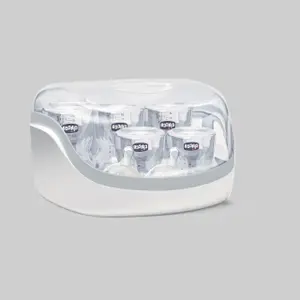
If you’re breastfeeding exclusively at home, nothing else is essential. A breast pump comes in handy as soon as you want to let your partner give a bottle, build up a supply or ease engorgement. Expressed milk can then be stored in bottles or bags, and a steriliser and bottle warmer complete your kit when you give breast milk in a bottle.
Pillows, breast pumps, sterilisers: dedicated pages
Each accessory has its own page. Nursing pillows help keep your baby comfortable during feeds, manual or electric breast pumps collect your milk, and sterilisers thoroughly clean breast pump parts and bottles. Bottle warmers gently warm expressed milk, and dummies satisfy your baby’s need to suck between feeds.
Expressing and storing your milk
A manual breast pump is enough for occasional use; an electric model, single or double, saves valuable time if you express every day. In France, hire of an electric breast pump is covered by the health insurance system with a prescription. Whichever model you choose, the breast shield must be the right size for your nipple: too small and it rubs; too large and it doesn’t work properly.
For storage, Anses recommends some simple guidelines: four hours at room temperature, forty-eight hours at the back of the fridge at no more than four degrees, never in the door, and four months in the freezer at minus eighteen degrees. Write the date on each container and fill it three-quarters full, as milk expands when frozen.
Breastfeeding after returning to work
Going back to work doesn’t mean you have to stop breastfeeding. The French Labour Code gives breastfeeding employees one hour a day, split into two periods, during the year after the birth, to express milk or breastfeed at work. Build up a small freezer stash in the weeks beforehand, without trying to fill whole drawers.
At work, a double breast pump halves the length of each session, and an insulated bag with an ice pack keeps the milk cool until you get home. At home, many mums keep the morning and evening feeds: this is combination feeding, where the person looking after the child gives them expressed milk in a bottle during the day.
Getting the right breastfeeding gear at the right time
Pillows, breast pumps and sterilisers are often bought before the birth or just before returning to work. The Black Friday baby products sale and the festive season are a chance to complete your baby registry, followed by the winter baby products sales. The spring French Days, summer sales and back-to-school season come next. Baby products clearance brings together end-of-line items.
Frequently asked questions
Until what age should you breastfeed your child?
The World Health Organization recommends exclusive breastfeeding until six months, then continuing alongside other foods until the age of two or beyond. Beyond these guidelines, how long to breastfeed is a personal choice for the mother and child.
How can I breastfeed my baby lying down at night?
Lie on your side with your baby facing you, tummy to tummy, and their mouth level with your nipple. Place a pillow behind your back for support. Afterwards, put your baby on their back in their own sleep space.
Can you breastfeed in a baby sling?
Yes, once breastfeeding is well established and you’re confident using the sling: loosen it slightly to lower your baby to breast height. Keep their face clear and tighten the sling again after the feed.
How can I stop breastfeeding a two-year-old?
Do it gradually, dropping one feed at a time and starting with the one your child is least attached to. A replacement routine, such as a cuddle or a story, can help you through each step.
Why does my baby pull on my nipple?
Often because they haven’t latched on deeply enough, or because the flow is too fast or too slow for them. If it hurts, a midwife or lactation consultant can watch a feed and help you adjust the position.













