
Bottle warmers for milk at the right temperature

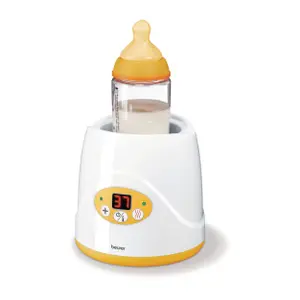
A baby bottle warmer warms your baby's milk evenly, without the hot spots left by a microwave. It's especially useful at night and for breast milk stored in the fridge, which is best warmed gently. Depending on the model, it can also warm baby food jars and go with the family in the car or on holiday.
Warm milk, with no hot spots.
Steam, water bath or portable
- Steam bottle warmers are the fastest: a few minutes is all it takes, which is handy at three in the morning.
- Water bath models heat the water around the bottle more slowly but more gently, making them suitable for breast milk; many have a defrost function.
- Portable bottle warmers plug into the car cigarette lighter or a USB port, or run on a battery, making them useful for long car journeys and holidays.
Check that the warmer is compatible with your bottles, whether they have a wide or narrow neck and are made of glass or plastic, as well as with baby food jars if you plan to warm meals.
Other breastfeeding accessories
A bottle warmer works alongside the rest of your equipment. Breast pumps collect breast milk for you to warm later, while sterilisers thoroughly clean bottles and teats. Nursing pillows help you position your baby comfortably during feeds, whether breastfeeding or bottle-feeding, and dummies soothe them afterwards.
Warming breast milk without damaging it
Breast milk contains antibodies and enzymes that are sensitive to heat, so it should be warmed to around body temperature, about 37 degrees, and never above 40. A water-bath bottle warmer or one with a special breast milk setting will keep within this limit.
Frozen milk is best defrosted in the fridge or in a bottle warmer on the defrost setting, never at room temperature on the worktop. Once defrosted, it must not be refrozen; once warmed, it should be given within an hour and must not be warmed a second time. Gently swirl the bottle to mix in the cream that has risen to the surface, as it contains a good share of the milk’s fat.
Good habits for every bottle
Before giving your baby the bottle, shake it to distribute the heat, then pour a few drops onto the inside of your wrist: the milk should feel lukewarm, barely noticeable. This test is still essential even with a programmed appliance, as the milk’s starting temperature varies depending on whether or not it has come out of the fridge.
Do not leave the bottle kept warm for hours while waiting for your baby to wake: warm conditions encourage bacteria to grow. It is better to get the bottle warmer ready and start the cycle at the first cry. Finally, descale the unit regularly with white vinegar or the product recommended by the manufacturer, as limescale increases the warming time.
Bottle warmers at great prices
A small appliance often added to a baby gift list, a bottle warmer is on sale at various times of the year. Black Friday comes before the festive season, followed by the winter baby and childcare sales at the start of the year. The spring French Days, summer sales and the back-to-school period follow, while the special offers page brings together current deals.
Frequently asked questions
Do you have to warm a bottle?
No, you can give your baby formula made with room-temperature water as it is, if they are happy to drink it. Warming is useful for milk taken from the fridge, especially breast milk that has been kept cold.
How long does a bottle warmer take?
A few minutes for a steam model and a little longer for a water bath, depending on the amount of milk and its starting temperature. A bottle taken from the fridge will always take longer than one at room temperature.
Can a bottle warmer heat baby food jars?
Most models can take glass jars using a basket or adapter. Stir the purée well with a spoon before serving, as the centre heats more slowly than the edges.
How do you warm a bottle in the car?
A portable bottle warmer plugged into the cigarette lighter or a USB port will do the job during a stop. Always do the wrist test before giving the bottle, and never feed your baby while the vehicle is moving.
Can you use a bottle warmer with a glass bottle?
Yes, as long as it fits in the warming chamber and the manufacturer says it is suitable. Glass warms a little more slowly than plastic but retains heat for longer, so be extra careful to check the temperature.











