
Sterilisers for baby bottles and teats
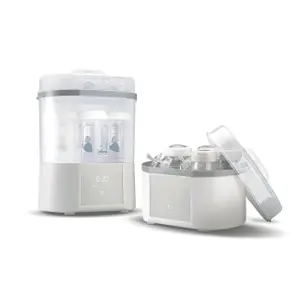
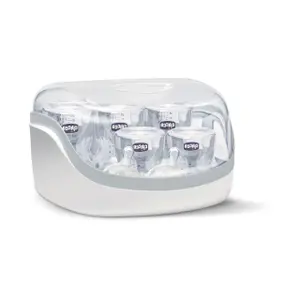
A baby bottle steriliser gets rid of germs in just a few minutes that washing leaves behind in the nooks and crannies of teats, rings and breast pump shields. Electric, microwave or cold-water models fit in with your family’s routine, whether you use one every day for a newborn or now and then for a dummy that’s fallen on the floor.
Clean bottles and teats, with no effort.
Electric, microwave or cold-water sterilisation
- The electric steam steriliser sterilises several bottles and their accessories at once; some models also have a drying cycle, so you don't have to handle wet parts.
- The microwave steriliser is a compact, lightweight box that you add a little water to, making it handy for holidays; it cannot be used with any metal parts.
- Cold-water sterilisation is done in a container of water with tablets or solution, without electricity, but requires a longer soaking time.
If you don't have one of these, boiling the items in a saucepan for five minutes is a handy backup option.
Other accessories for your baby's feeds
A steriliser is part of your feeding kit. Bottle warmers gently warm the milk, while breast pumps collect breast milk; their breast shields can also be sterilised. Dummies benefit from being sterilised regularly, and breastfeeding pillows help position your baby for a feed.
Do you still need to sterilise baby bottles?
This question comes up often, and the advice has changed. The French High Council for Public Health considers that, at home, thorough washing with hot water and washing-up liquid, using a bottle brush, followed by air-drying is enough for a healthy baby. The old rule of sterilising for the first four months is therefore no longer a requirement.
Even so, sterilisers still have their uses. Manufacturers advise you to sterilise new bottles and teats before first use. They can also be useful for a premature or vulnerable baby, on medical advice, for breast pump parts that come into contact with breast milk, and when the water or washing conditions are uncertain, for example when travelling.
How to use and care for your steriliser
Sterilising does not replace washing: take apart every bottle, ring, teat and cap, wash them, then place them opening-side down so the steam can circulate everywhere. Don't overfill the chamber, and wait until it has cooled before opening it, as steam can burn your fingers.
Limescale is the enemy of electric sterilisers: it forms a white crust on the heating plate and makes each cycle take longer. Descale regularly with white vinegar or citric acid, following the instructions, and empty out any remaining water after each use. Once sterilised, the parts can be kept in the closed appliance for a few hours, or assembled straight away with clean hands.
Sterilisers on offer
A must-have on many families' baby lists, sterilisers are often available at a good price at various times of year. The Black Friday baby and child care event and the end-of-year festive season kick things off, followed by the winter baby and child care sales. The spring French Days, summer sales and back-to-school season round out the calendar, while the baby and child care clearance brings together end-of-line products.
Frequently asked questions
How many bottles can you fit in a steriliser?
Electric models often hold up to six bottles with their teats, while microwave steriliser boxes usually hold two to four. If your baby is exclusively bottle-fed, a large model means you won't have to run several cycles a day.
Can you sterilise glass bottles?
Yes, glass can withstand steam and boiling water perfectly well. Just check that the bottles fit in the chamber, and handle them carefully when taking them out, as they stay hot for longer.
Do teats get damaged in a steriliser?
Silicone stands up well to steam; natural rubber yellows and wears out more quickly. Check teats before each use and replace them at the first sign of a crack or change in shape.
Should you use bottled water in a steriliser?
No, tap water is fine unless the instructions say otherwise. If your water is very hard, descaling more often or using filtered water will help protect the heating plate.
What should you do if steam escapes during a cycle?
Check that the lid is properly in place and that the baskets are fitted together correctly. A little steam escaping through the vent is normal; a significant leak often means a worn seal or a limescale-covered appliance.













